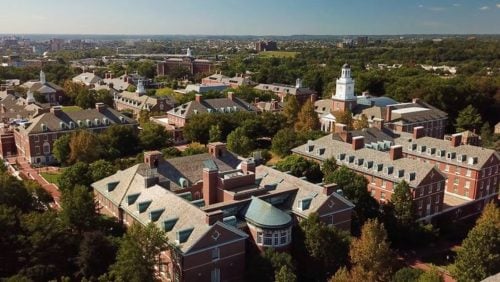
Innovative Education. Entrepreneurial Spirit. Societal Impact.
Prepare for personal and professional success—while advancing technology, improving lives, and bettering the planet. At Johns Hopkins Engineering, you’ll tackle real-world challenges, learn, and create in cutting-edge labs, learning spaces, and design centers, under the mentorship of renowned scholars and scientists.
Our faculty members contribute to groundbreaking research to their fields. In fact, according to the National Science Foundation, Johns Hopkins University is the nation’s leading academic institution in total research and development spending.
With more than 20 research centers and institutes and through strong community, university, and industry partnerships, Hopkins Engineering is a driving force in the future of technology, health care, and engineering education.
Get to Know Us
Learn how Whiting School of Engineering is transforming lives and society through education, research, and translation.

Our Values and History
JHU has been preparing engineers for more than 100 years, our curricula and facilities are always evolving to meet the demands of a changing world.
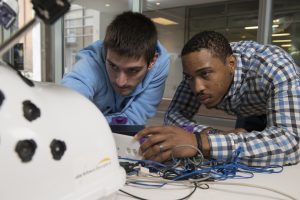
Degrees and Programs
Our nine academic departments offer bachelor’s, master’s, and doctoral programs, as well as a range of relevant minors, including entrepreneurship and robotics. Our programs are led by exceptional scholars, researchers, scientists, and engineers.

Community and Industry Outreach
Our world is interconnected. To engineer solutions for the future means collaborating with our colleagues across campus, the community, business, and industry.
Whiting School of Engineering Advisory Board
The WSE advisory board is a consultative body made up of professionals from engineering and other industries to help advise the Dean and leadership on matters related to multiple facets of the school and its success.

Meet the Dean
As the Benjamin T. Rome Dean at Johns Hopkins University’s Whiting School of Engineering, Ed Schlesinger has launched numerous initiatives to enhance the student experience and the school’s impact on society.
“Hopkins has an altruistic focus that pervades all through the university … everything at Hopkins is very human-centric and people were very front-and-center. It was mission-focused. ”
 Carol Reiley, MS '07
Co-Founder and Former President of Drive.ai, Named Forbes’ Top 50 Women in Tech in 2018
Carol Reiley, MS '07
Co-Founder and Former President of Drive.ai, Named Forbes’ Top 50 Women in Tech in 2018
Hopkins Engineering Is Creating a Better Future
-

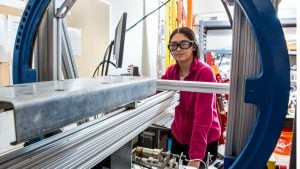
Advancing Technology
Our faculty, students, and partners are revolutionizing how humans act with intelligent systems, the environment, and each other.
-
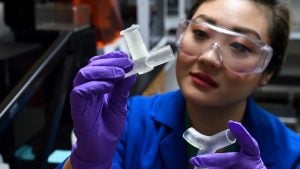
Improving Healthcare
JHU is a global leader in biomedical science discovery, and our engineering programs are on the frontlines of health care evolution.
-

Building a More Resilient World
Through collaboration with partners across JHU, we’re preparing society and our infrastructures for the unexpected.
-

Leading the Way
With a culture of intentional collaboration, we are preparing visionary leaders solving complex societal and human problems across the globe.
Begin Your Hopkins Engineering Journey
Get access to exceptional academic programs, unrivaled research opportunities, project-based learning, international experiences, and interdisciplinary collaboration.
-

The early-career award recognizes excellence with the potential for a lifetime of leadership in integrating education and research.
-

AAEES award recognizes an educator who has made a significant contribution to the profession in the area of educating practitioners
-

As the Bloomberg Distinguished Professor of Sustainable Chemical Transformations, Hermans focuses on finding cleaner, faster industrial practices that reduce the environmental impact of manufacturing and boost the production of renewable energy.